
SUN-LOVING OR HEAT-STROKED?
CATS AND OTHER PETS IN EXTREME CONDITIONS

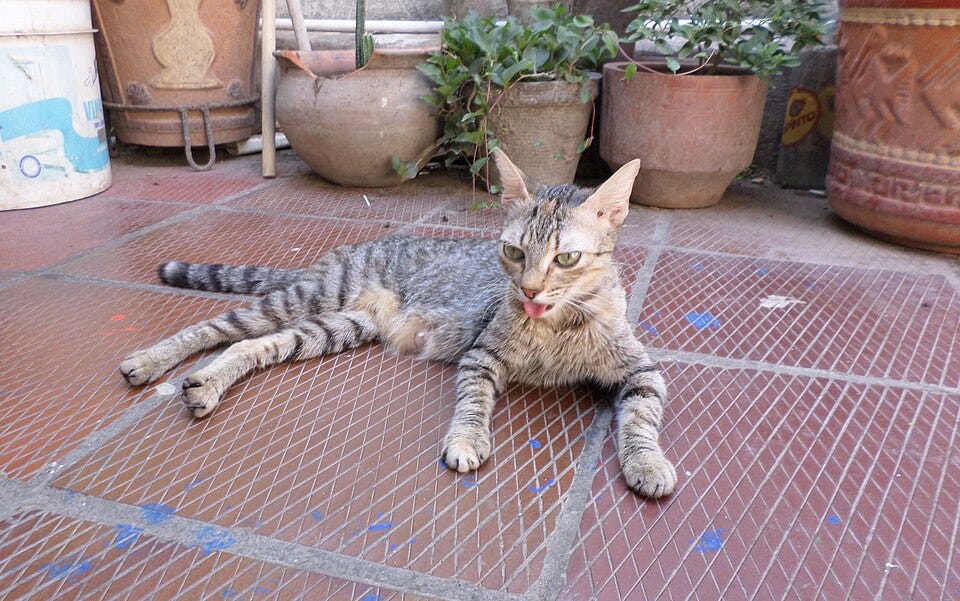
Unlike most of my posts I have little humor to offer here. This PSA post is about those two dreaded, often misunderstood and sometimes banned words: climate change. Or global warming if you prefer. Though many humans even now do not “believe” in climate change, nevertheless, it is happening. It surrounds us like a warm blanket when we are already hot, or worse. With record-breaking temperatures and heat indexes around the globe, we find ourselves struggling to keep safe and to keep our pets and human loved ones safe. The number of species affected is staggering, from the tiniest plankton to the largest whales to fresh-water species like salmon and land-dwelling animals and plants who live in often new danger zones. Along with the critters, we are witnessing changes most of us have never had to face.
In this post I want to focus on what you, pet owner, might do as we enter the summer months.
Cats in the wild generally get their water from their prey. Kibble is a recent invention for them and it fills a niche for indoor cats. Generally, wet canned cat food keeps your cat hydrated, though it is a good idea to check with your vet. Too much canned food can cause weight gain. Advice is available for senior cats or those diagnosed with a variety of conditions.
Dehydration is a threat to cats in extreme weather. I highly recommend the information on the link below to WebMD.com which addresses conditions such as heatstroke and over-heating in cats.
Cats naturally run a higher body temperature than we do. If you foster or adopt a cat, you might want to check if it’s from another part of the country, and may need to get acclimated to her new home’s conditions.
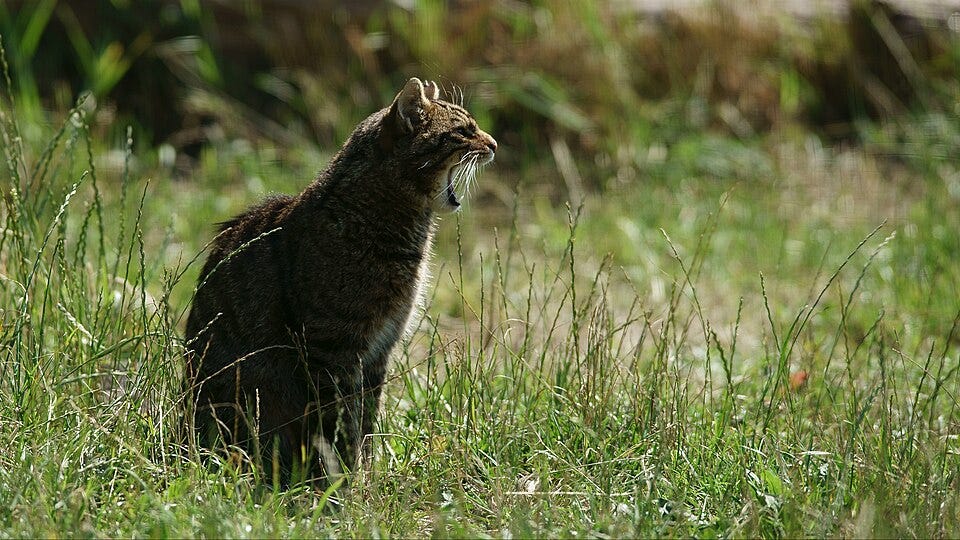
Above: “Seen at the British Wildlife Centre. ‘McTavish’, during the Keeper’s talk. For once, he’s not having a yawn; coming from the Highlands of Scotland, he’s clearly not too happy with the higher summer temperatures of southern England.”
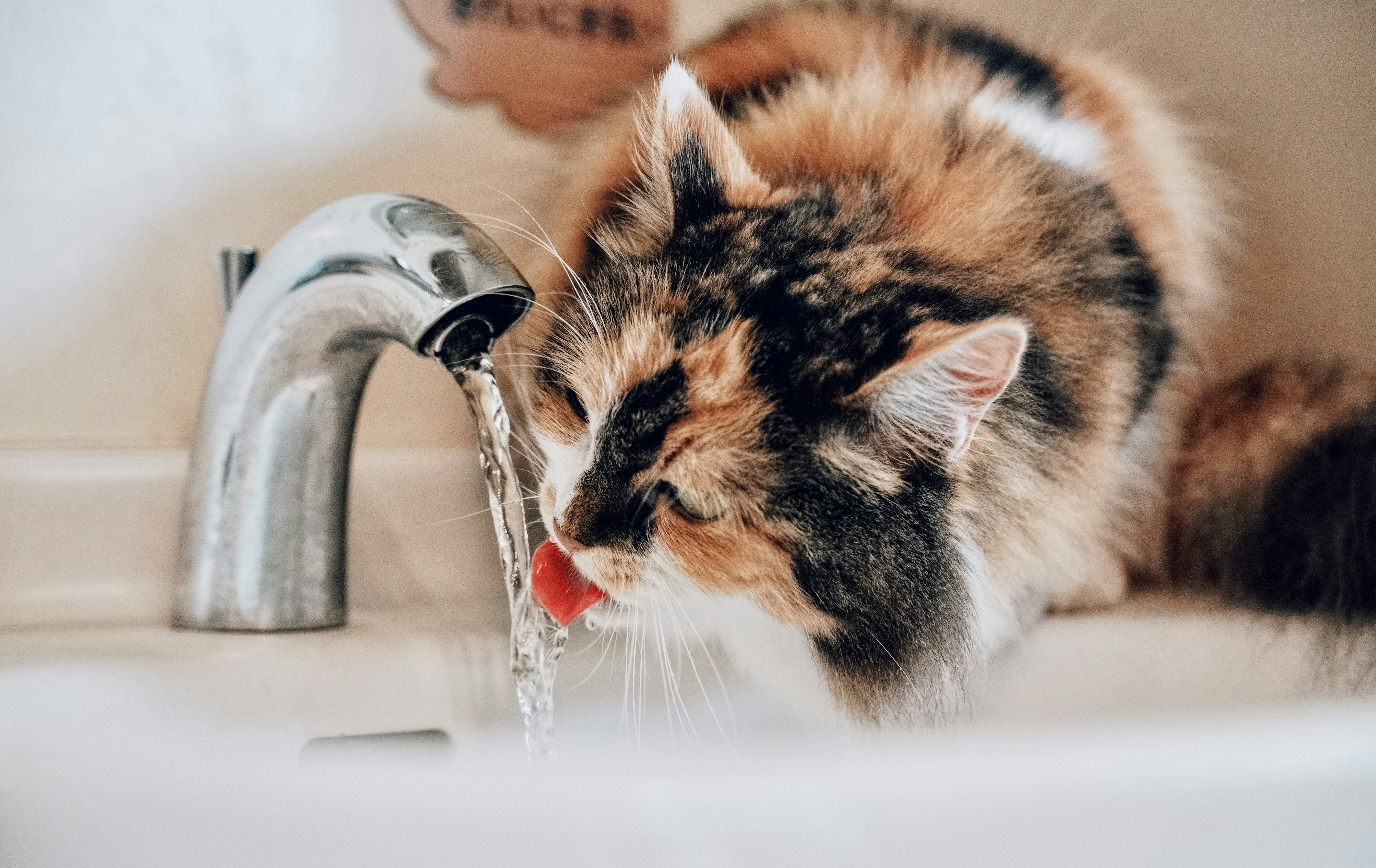
Cats often prefer running water or fountains to standing water in bowls. Perhaps their ancestors learned that wide pools of standing water could be deadly or patrolled by bigger predators.
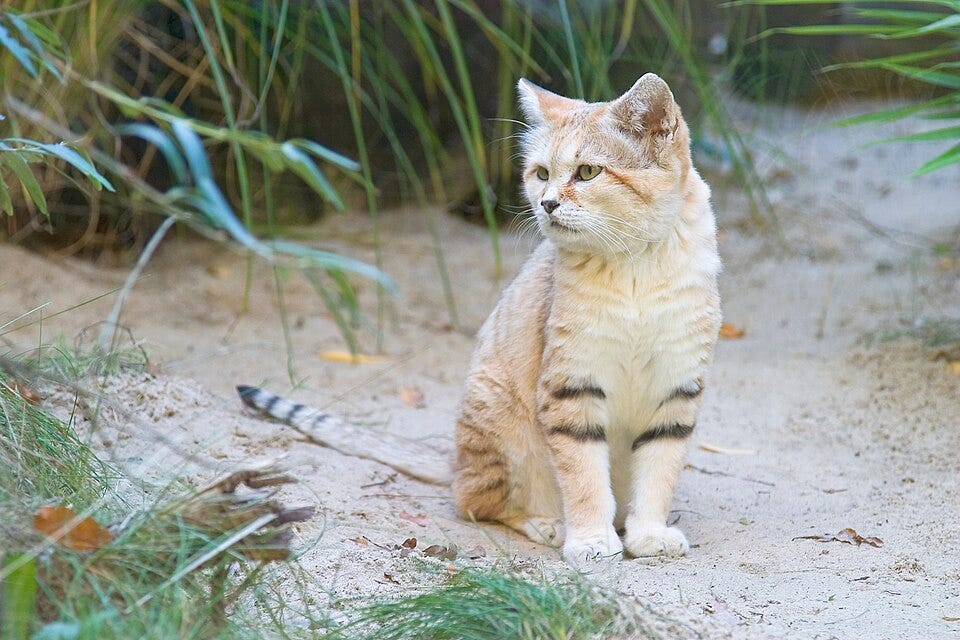
A Sand Cat: Felis Margarita. This species has adapted well to desert conditions. He gets most of his water from prey and can withstand dry conditions longer than many other cats.
Local online gatherings or other social media groups often provide simple tips such as keeping a fan running on top of a cooler filled with ice, providing shady plants and dark spaces. Ventilation is important for humans and pets. Outside cats, when too hot, may hide under thick bushes. Cat cooling mats get mixed reviews. Be aware of early sign of heat stress, such as restlessness, staggering and/ or vomiting.
The resources below can provide far more details than I can offer in this post. These and other searches will bring up many other credible sources.
DISCLAIMER: I am not a veterinarian, nor do I have any training in this medical speciality or in other related fields. Please verify any resources and advice you receive, including from this post, with your veterinarian.
Stay Safe and Keep Cool!
*******************************************
CREDITS: Photo: Cat Panting: EEIM. 2014. Commons.wikimedia.org
Photo: “Some Don’t Like It Hot”. Peter Trimming, 2013. Commons.wikimedia.org
Photo: Cat drinking at faucet. Sugerman Joe. 2024.Unsplash.com
Photo: Sand Cat ErRu. Zoo Osnabrück. Germany. 2012. Commons.wikimedia.org
SOURCES:
Cat Dehydration: Symptoms, Causes, and Treatments
How to Keep Cats Cool in Summer . PetHealthClub.com. Copyright 2026. Bristol, AustraliaMedically reviewed by Lizzie Youens, BSc(Hons) BVSc MRCVS. Published on 18/06/2019 • Reviewed on 17/05/2026
Film: Breaking Boundaries: The Science of Our Planet. Narrated by David Attenborough. Potsdam Institute for Climate Impact Research, Potsdam, Germany. Available exclusively on Netflix.
With global heating, we all need to watch out for pets and wildlife in this heat that is killing humans.