
FEAR, FIGHT AND FUR
A BRUSH WITH CAT TAILS

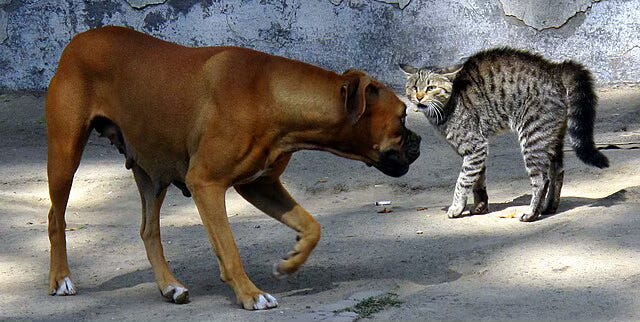
Have you ever felt the hair on the back of your neck prickling?
Cats have refined this automatic reaction over thousands of years. When suddenly faced with danger their tails puff out without warning. What is the purpose of this brushy display? Is it an aggressive response to possible attack? A reaction to fright when brain receptors will react within seconds? Perhaps both.
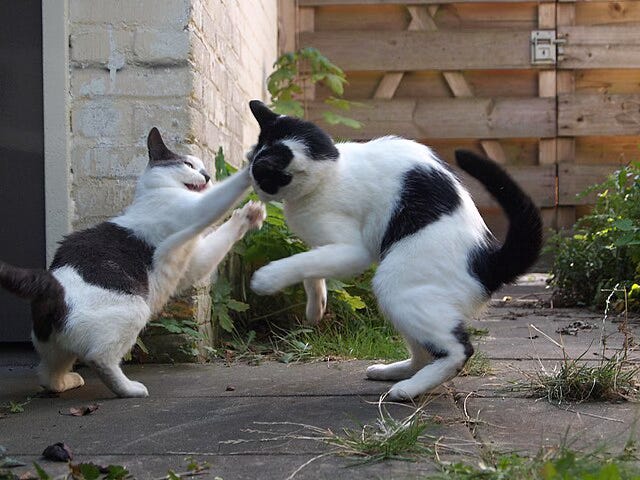
I am always startled when I see this behavior.l It is usually unexpected and very impressive. Often accompanied by low moaning meows, growls and threatening snarls, cats can instantly revert to their ancestors’ tactics for survival. Some cats will submit to this sign from a dominant cat in the wild, or in the household.
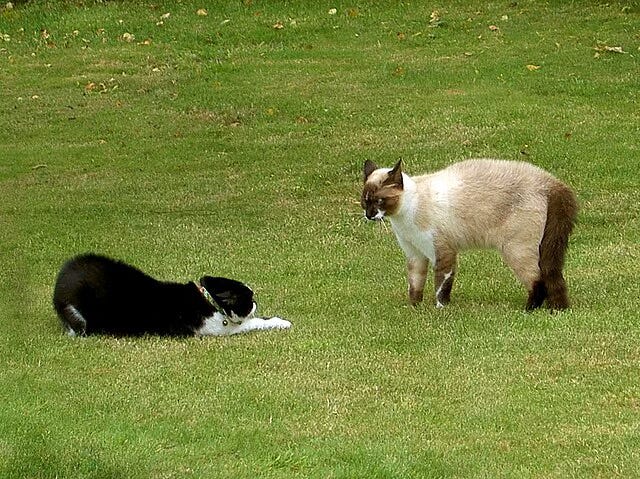
Switching tails may accompany the bottle brush effect.
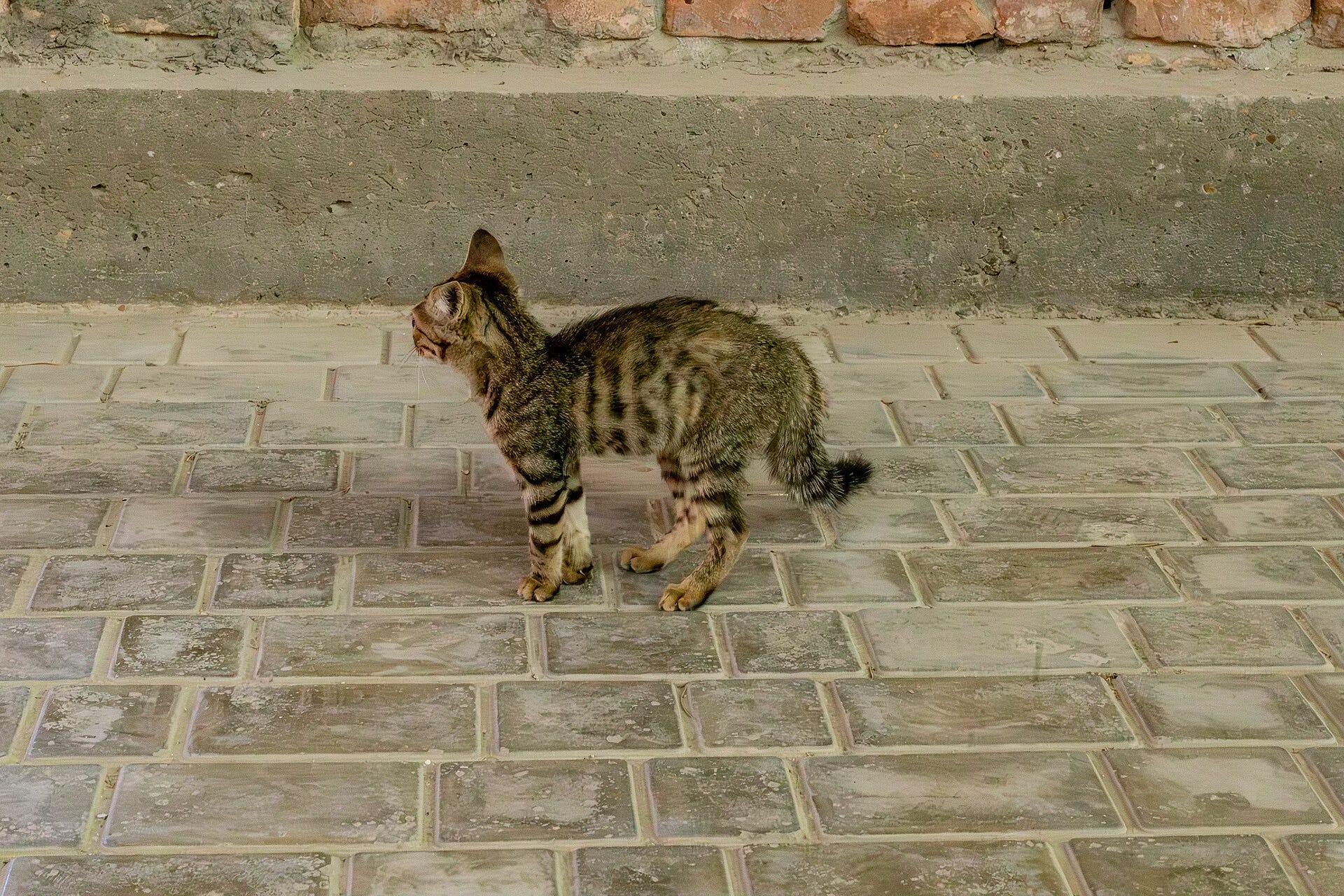
Kittens are frightfully cute and even they react like their grownups, probably unconsciously, because their reaction is controlled by evolved receptors in their nervous system.
And what about their larger cousins? Lions, with their long tufted tails might not have the capacity to show off a puffy hair-raising display. But this painting indicates the male lion might display his aggression with his mane. Biologists believe the lion’s tail acts as a fly swatter at the kill and as important balancing tool. Leaping on fleeing prey lions, will grab with their jaws while clinging to the fleeing prey with their claws and maintaining their balance with their tails. Interestingly, the paintings and other images I found in my research most often focus on the King of Beasts. The females, however, are the hunters within their prides, kindly providing dinner for their lord and master.
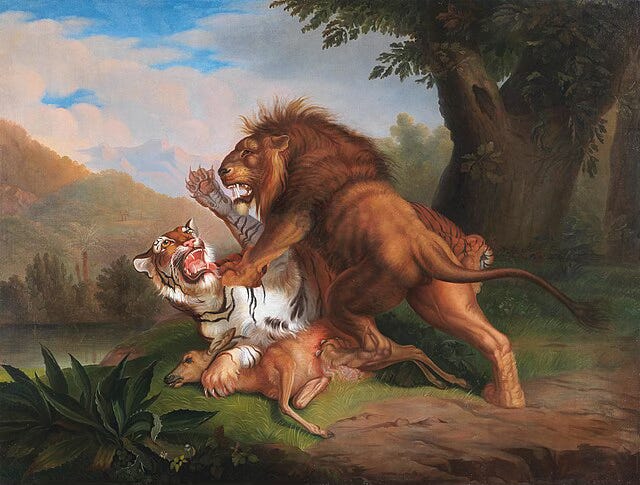
Cats often switch their tails. We assign our human traits and emotions to those feline behaviors, but with our observations in context that seem logical to do so. Impatience? Fast switches back and forth while talking or sitting. Yes! Contentment? A slow tail tap across our lap. Yes! Our pet cats’ tails can also be indicators of their health as well. A chronically puffed up tail may indicate physical distress. See article links below.
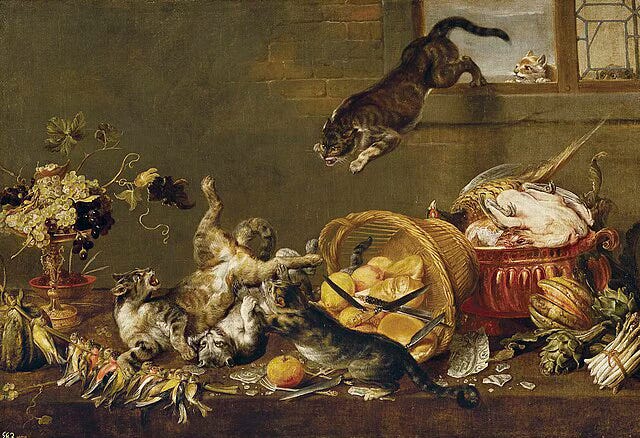
Cats fights have been taking place for a long time. It seems like there is plenty of food to go around in this scene, but someone has to be in charge of distribution!
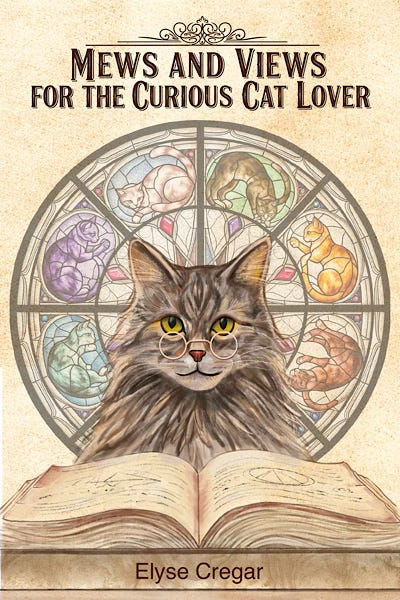
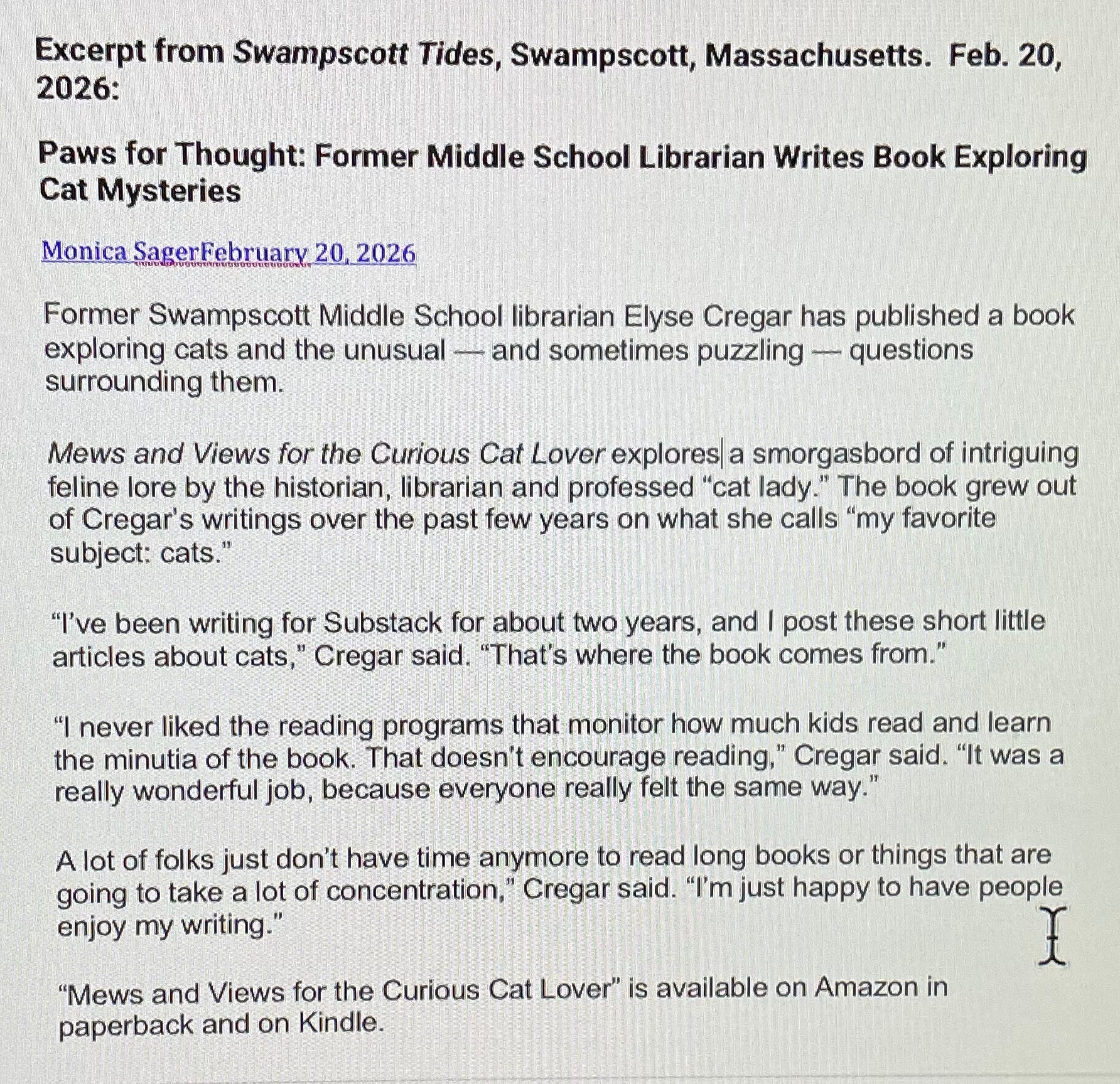
Now in paperback!
Mews and Views for The Curious Cat Lover by Elyse Cregar.
Original Illustrations by Tamara Clark
Paperback Pub date: February 7, 2026 ISBN: 978-0-9621292-5-4 available at Amazon
Eboook: ISBN 978-0-9621292-4-7 available at Amazon and more new vendors!
We would love your honest Review at Amazon or other sites if you are inspired! Scroll down from the cover image on Amazon to Reviews. Thank you so much!
Find links to more ebook vendors at Books2read.com/elysemcregar or NEW Vendors:Bookshop.org and Overdrive.com for library readers and the Home of Libby! Please request at your local public library.
CREDITS:
PHOTOS: Commons.wikimedia.org
Cats and Dog Standoff photo: Peretz Partensky. 2009
Submissive cat after a struggle: Mikael Restoux. 2008.
Two cats jump to play fight. Adrian Jack Bunsby. 2011.
Tiger and Lion fight over a Fawn. Johann Wenzel Peter. (1745-1829) Paining. 1809.
Cats Fighting in a Larder. Paul de Los. (1595-1678) Painting: Between 1630 and 1640.